
Architects create visuals to show their ideas, layouts, and experiences. The tools they depend on have changed over time. They began with hand-drawn sketches, shifted to CAD designs, and now use realistic digital images. Every improvement allowed architects to show clients what a finished building could look like before the real work started.
Technology is moving ahead. AI is making 3D architectural rendering faster and more imaginative. It uses machine learning neural networks and automation to improve images and simplify production. This helps architects, designers, and real estate professionals save time and share their ideas more with clients.
Making Architectural Rendering Faster
High-quality renders used to take hours or sometimes even days to complete the final visual of architectural designs. Now, AI has completely changed how that works.
- Tools that rely on AI-powered denoising clean up noise in completed images. They create quick previews that almost look real.
- Architects use tools like NVIDIA DLSS, D5 Render, and Lumion to rely on 3D rendering in AI and share updates to designs right in front of clients during meetings.
- Teams finish their tasks faster, allowing them to show results the same day instead of spending the night doing final renders.
This enhanced workflow improves efficiency. Architects can also explore more creative designs in the earlier phases without stressing over slow rendering times.
AI Creates Better Design Workflows
AI does not aim to make tasks quicker. It allows people to think and work in smarter ways. By handling routine or complex tasks, AI allows architects to spend more time being creative in their work.
- AI builds 3D models: AI takes flat 2D sketches and changes them into detailed 3D models with accurate materials and textures. This shows how useful AI in 3D design has become.
- Scene setup suggestions with AI: AI tools help guide users in setting up scenes by offering ideas on lighting, camera angles, and material changes in 3D modeling.
- BIM and CAD Integration: AI connects architectural data with rendering tools to ensure models stay precise and updated as changes happen.
- Exploring creative designs: With the help of generative tools, AI produces multiple design versions based on input, giving architects a chance to test and refine their plans.
This frees architects to spend less time on repetitive tasks, giving them more room to think and focus on building better solutions.
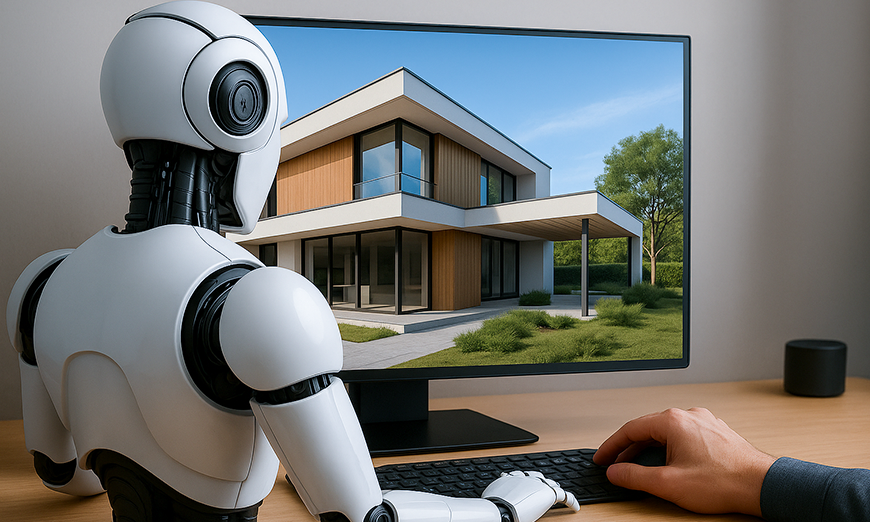
More Realistic Architecture Visuals
Clients demand images that could pass as real photos, and AI helps meet this need.
- Natural textures: AI taps into large material databases like wood, fabric, or glass to create lifelike surfaces.
- Lighting effects: Predictive 3D rendering AI mimics natural and artificial light with great accuracy by predicting environmental details.
- Neural Radiance Fields (NeRFs): This tech generates 3D spaces that offer depth, light, and detail to give a realistic experience.
- People and faces: When designs include humans, like ads or public zones, AI ensures movements, expressions, and body proportions look authentic.
These upgrades let teams visualize how a space will appear. They reduce errors in designs and clear up misunderstandings.
Client Communication and Interaction
AI plays a big part in shifting how client presentations work.
- Immersive walkthroughs: Virtual Reality and Augmented Reality powered by AI 3D rendering allow clients to experience virtual models and move through spaces.
- Quick changes: Teams can adjust layouts, colors, or materials during discussions.
- Easier communication: Interactive and detailed visuals help people who don’t know technical terms to grasp design ideas.
This makes approvals faster, minimizes revisions, and helps architects, contractors, and clients agree more on projects.
How It’s Used in Architecture
AI-driven rendering is bringing changes to architecture and construction in many areas.
- Selling Properties: Real estate uses lifelike 3D visuals to let buyers imagine completed spaces. These 3D architectural renderings help bring properties to life.
- City Design: AI in 3D modeling allows planners to design cities by simulating lighting, ventilation, and traffic flows.
- Interior Design: Designers rely on realistic previews to test layouts, materials, and furniture options before making final decisions.
- Construction Management: Visual simulations of project stages help teams plan better, avoid delays, and stop costly mistakes from happening.
3D rendering in AI goes beyond being just a tool for visualization when used in these methods. It serves as a critical resource to increase efficiency, enable better decisions, and drive sales growth.
How AI Enhances Architectural Rendering
The growth of AI brings some remarkable advantages.
- Faster Turnaround – Quick rendering speeds let teams push projects forward more.
- Lower Costs – By automating routine tasks, companies save money on rendering, whether they’re small startups or large businesses.
- Boosting Creativity – Architects can focus on inventing fresh design ideas while AI for 3D modeling handles repetitive work.
- Improving Access – Cloud-based AI 3D rendering tools allow smaller teams or freelancers to tap into high-end technology.
Challenges and Limitations
AI-powered rendering comes with challenges that users need to address.
- Robust Equipment Requirement – Using powerful GPUs and high-end machines remains important to get top-notch results.
- Dependency on Large Datasets – AI tools rely on wide-ranging and diverse training data for success.
- Preserving Creativity – Overusing AI in 3D modeling can reduce innovation and human creativity and originality.
- Intent versus Precision – Without proper oversight, AI-generated visuals might fail to represent what architects imagine.
Understanding these hurdles allows companies to find ways to balance automation with human creativity.
What Lies Ahead for AI in 3D Architectural Rendering
AI will continue shaping how architecture is visualized as we look toward the years to come.
- Generative AI – Designs entire buildings based on what users describe or request.
- AI with VR/AR – Allows designers to see real-time feedback inside virtual spaces.
- Predictive analytics – Models factors like energy usage, noise levels, and how people move through spaces to improve building performance.
- Sustainable architecture – Guides architects in selecting eco-friendly materials and energy-saving layouts to create greener structures.
- All-in-one platforms – Tools like D5 Render bring multiple AI functions together into a single AI 3D rendering system.
These tools paint a picture of a future where AI collaborates with architects instead of just helping them create visual ideas.
Conclusion: Paving the Way Forward in Architecture
The introduction of AI in 3D rendering goes beyond just improving technology. It opens doors to new ways to design, communicate ideas, and build structures. AI tools make rendering faster, bring fresh creativity, and make results look more lifelike. Architects can work faster, spend less, impress clients, and achieve better outcomes. Using these tools now strengthens a firm’s ability to thrive in the ever-evolving architecture field.
IndiaCADworks offers top-quality 3D architectural rendering services using the latest AI technologies. Our skilled professionals assist architects, real estate developers, and design firms in making detailed and affordable visuals that bring ideas to life. Check out our 3D Architectural Rendering Services to understand how we turn designs into quicker and more realistic models.